Why the base matters most
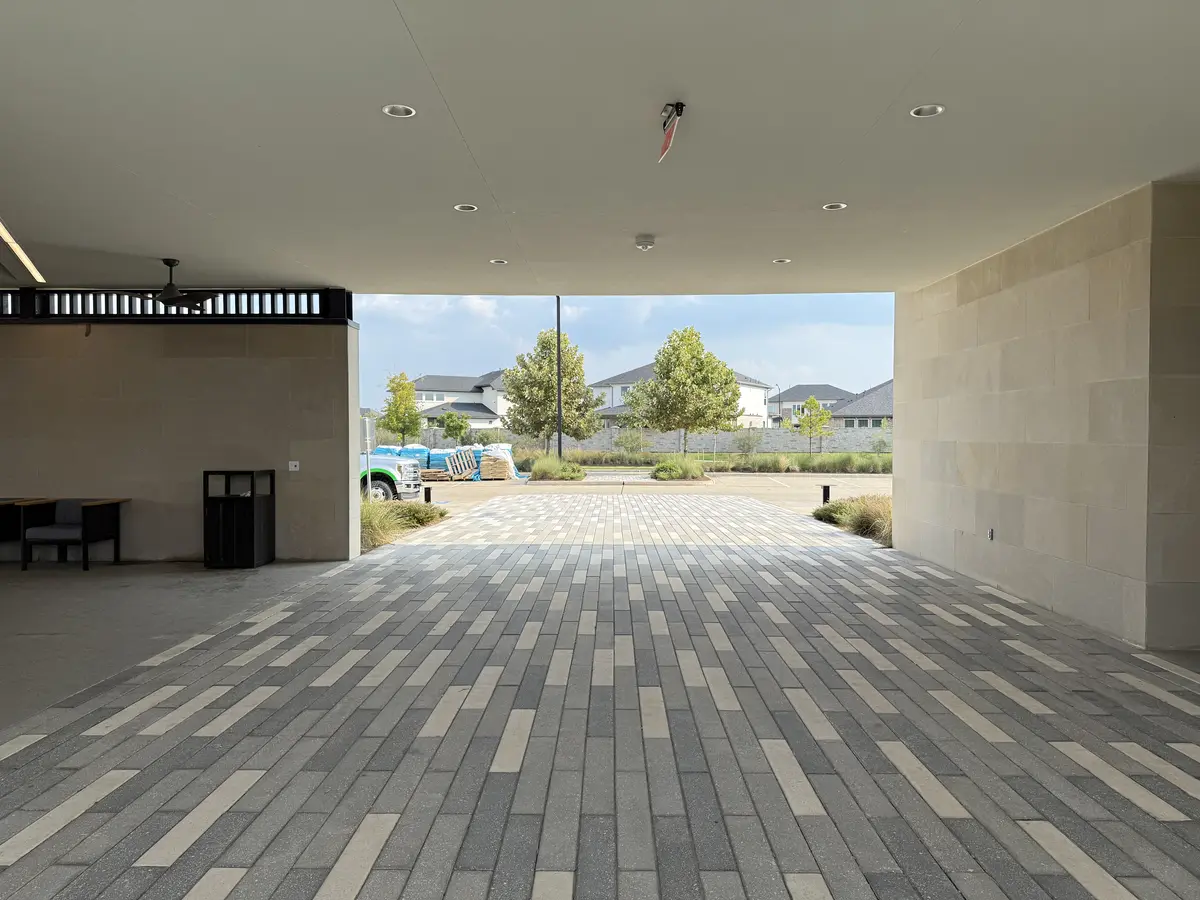
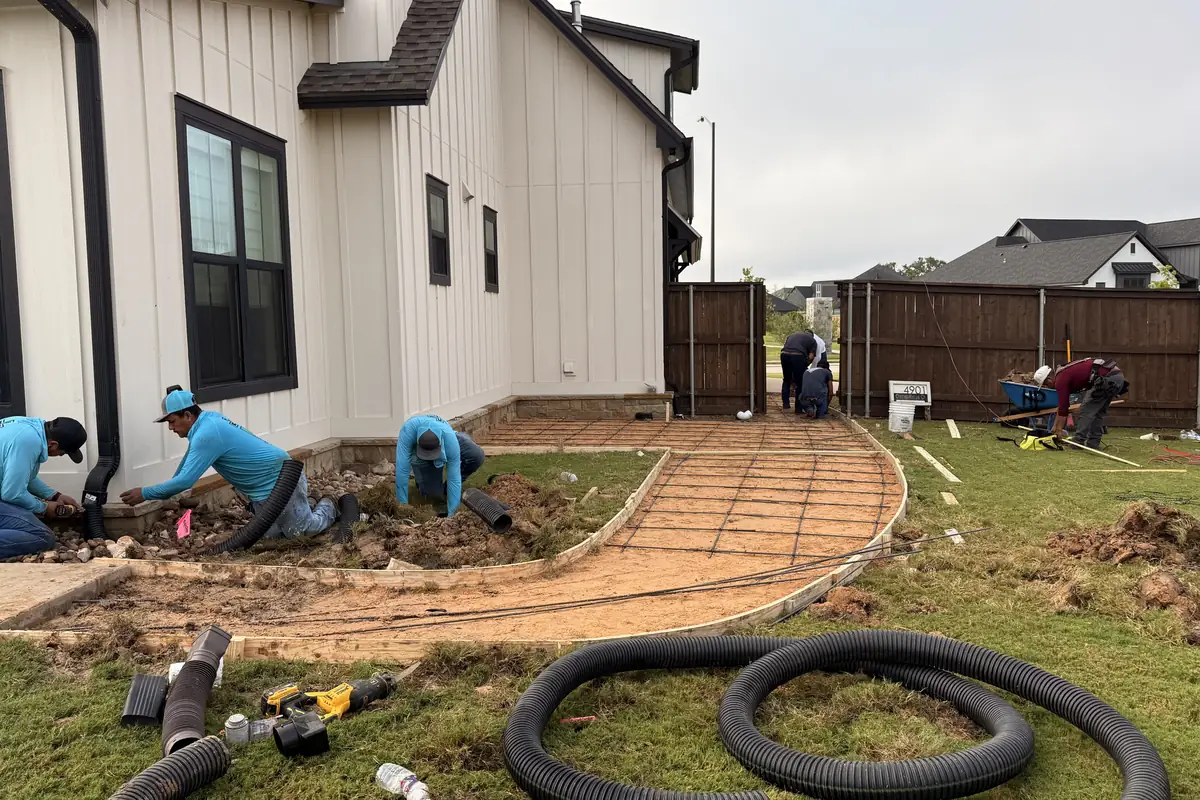
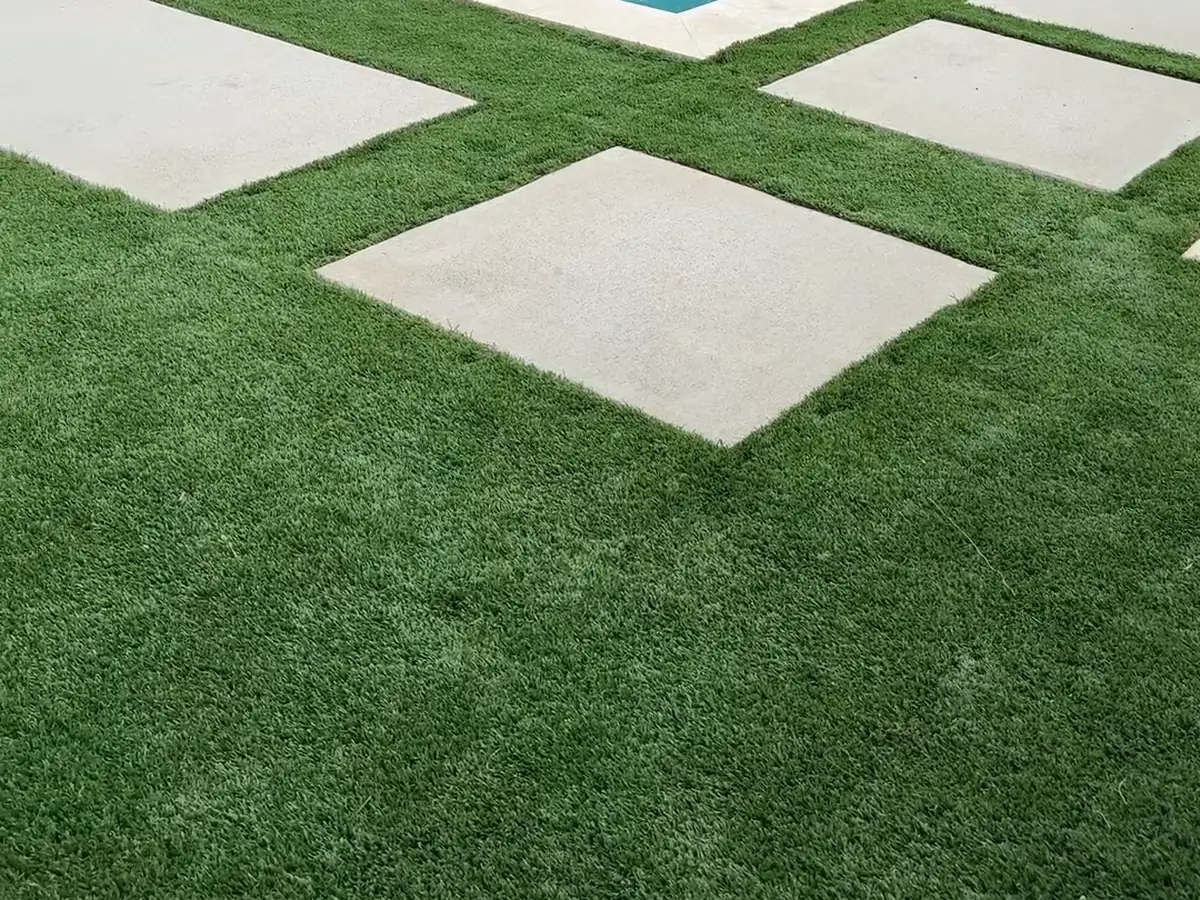
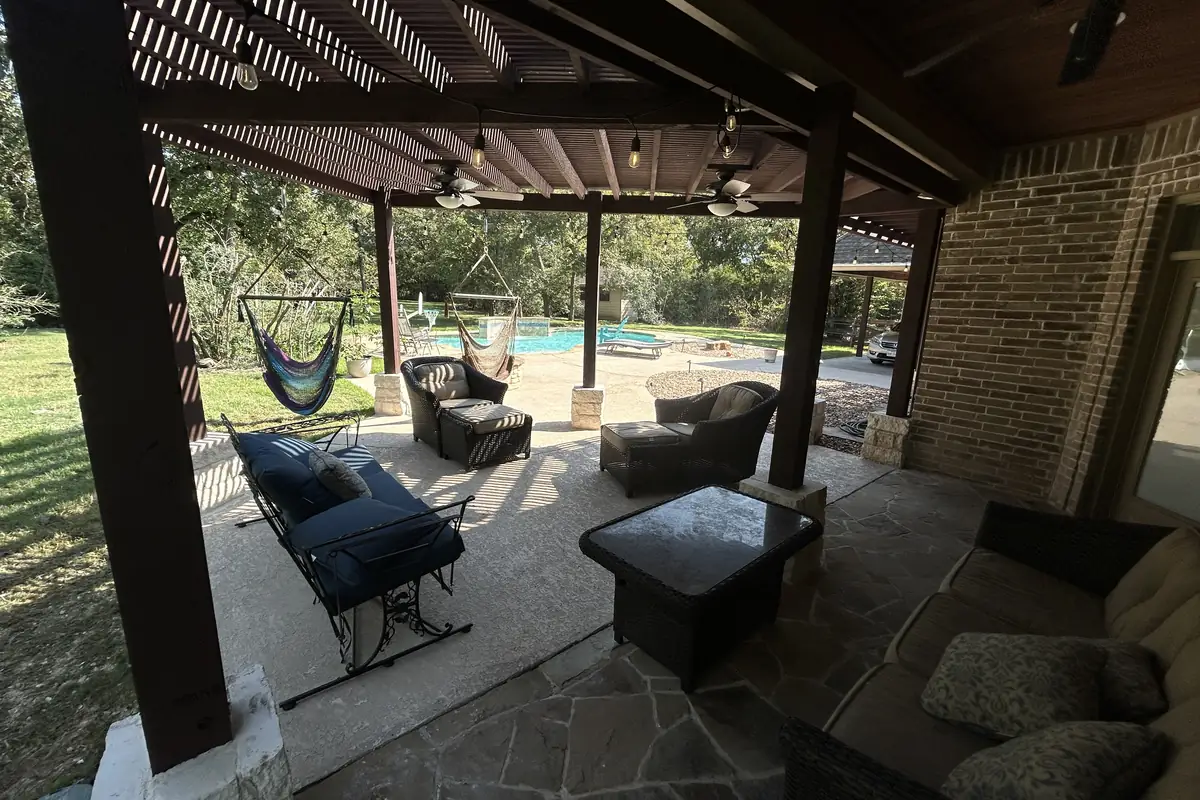
A patio is only as good as what lies beneath it. Brazos Valley clay moves with moisture, so the base matters most. Excavation depth, compacted aggregate and drainage limit settling, and a well built base is what keeps a patio level. The pavers, flagstone, travertine or limestone you see on top are laid in a pattern drawn for your home, but they only stay beautiful if what sits below is right. Our patios and hardscapes work starts there.
Pavers: a compacted aggregate base
For pavers, the steps are simple to describe and careful to carry out:
- Excavate the area.
- Set a compacted aggregate base.
- Cut slope for drainage.
- Lock the edges with restraint.
The result is a surface that stays level on clay that moves. Pavers also give more pattern and color, and single units can be lifted and repaired later. Poured concrete is a lower-cost surface with a simpler look. We weigh both against your yard and budget with you.
Mortar-set stone: an extensive footer first
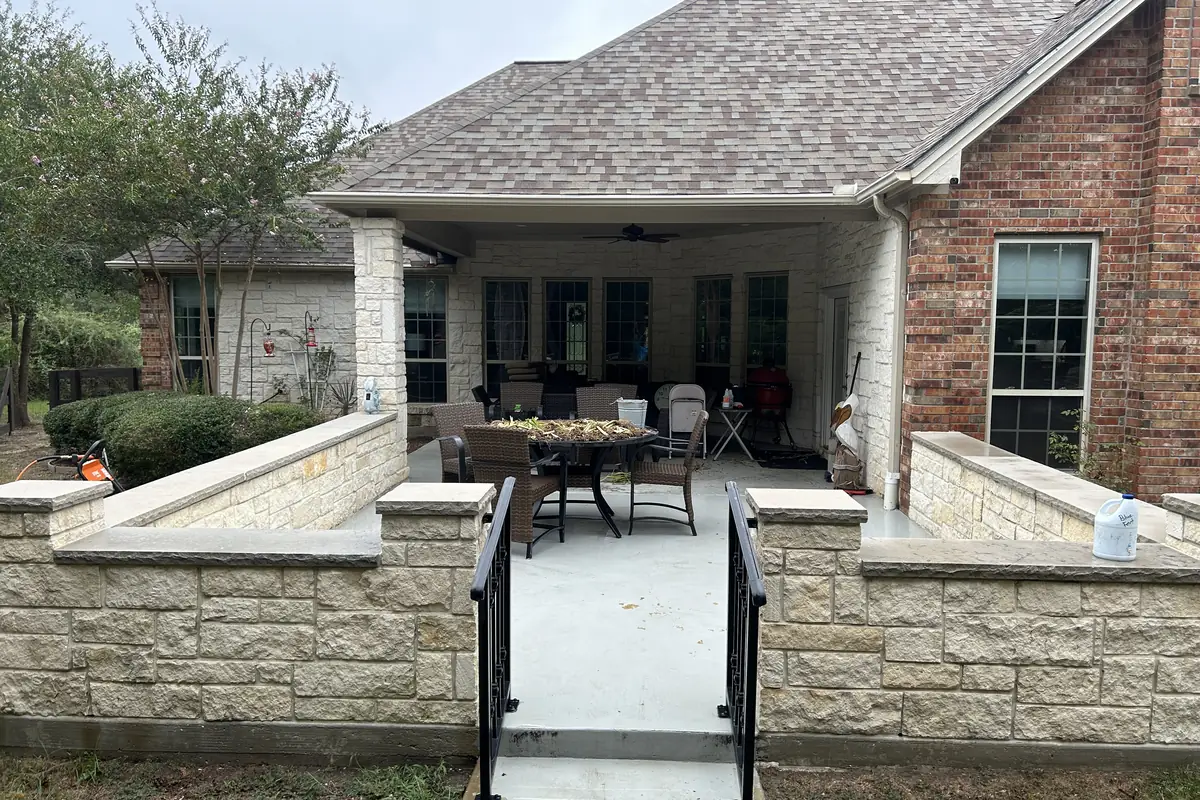
Natural stone set in mortar gets the same care underneath. We pour an extensive footer beneath the rock so it is built to last 10+ years, instead of setting mortar between stones on bare ground. Mortar between rocks on bare ground has nothing solid under it, and clay moves. The footer gives the stone a firm, level base to sit on.
What drives cost
Cost follows size, paver style, base depth and any steps, walls or edging. We draw the layout from your photos, and the written quote carries the schedule.
Care after handoff
Sweep, rinse, and top up joint sand when needed. Sealer is optional and helps with stains and color. Simple written care notes come with handoff.
Your next step: the project brief
Tell us the service, the address and the scope, and send a few photographs. We review every brief personally, and once we understand the project we reserve your consultation. For walls, see our notes on retaining wall footings and drainage.