What makes Brazos Valley clay different
Much of Bryan and College Station sits on heavy clay. Clay particles are tiny and pack tightly, so water moves through them slowly. After a storm the soil holds water at the surface instead of letting it soak away, and in a dry August it shrinks and cracks. Lawns, beds, patios and pool decks all have to be planned around that movement. Understanding it is the foundation of every outdoor project we design in Aggieland.
Signs a yard has a drainage problem
Water that stands for more than a day after rain. Soggy turf that never thickens. Mulch that washes out of beds. Soil pulling away from the foundation in summer, or water sitting against it in spring. Pavers or stepping pads that have begun to tilt. Any one of these is worth a closer look before new landscape or hardscape goes in. Most of them are quiet for a long time before they become expensive, and noticing them early is the kindest thing you can do for your property.
How clay moves through the seasons
Clay behaves differently in a wet spring than in a dry late summer. When it swells it can lift slabs and push against walls. When it shrinks it can leave gaps, settle soil beside the foundation and open cracks that the next rain will fill. Good design does not fight that cycle. It keeps water moving away from the house, builds hard surfaces on prepared bases and avoids leaving pockets where water can collect and soften the ground beneath.
Grading comes first
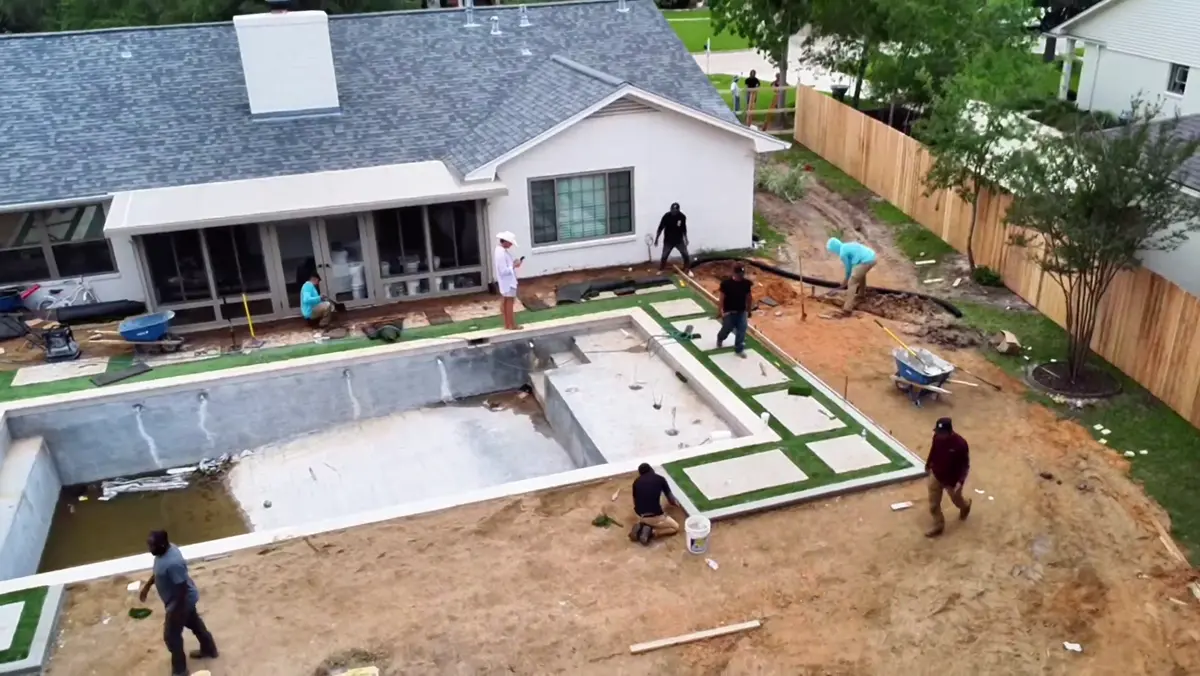
The most reliable fix is also the simplest: shape the ground so water has somewhere to go. A gentle, consistent fall away from the house and toward a safe outlet solves more problems than any pipe. On a design build project we set grades on the plan before anything else is drawn. In neighborhoods such as Miramont and Traditions, where lots vary in slope and neighboring yards share runoff, thoughtful grading also keeps your water from becoming someone else's concern.
Where drains earn their place
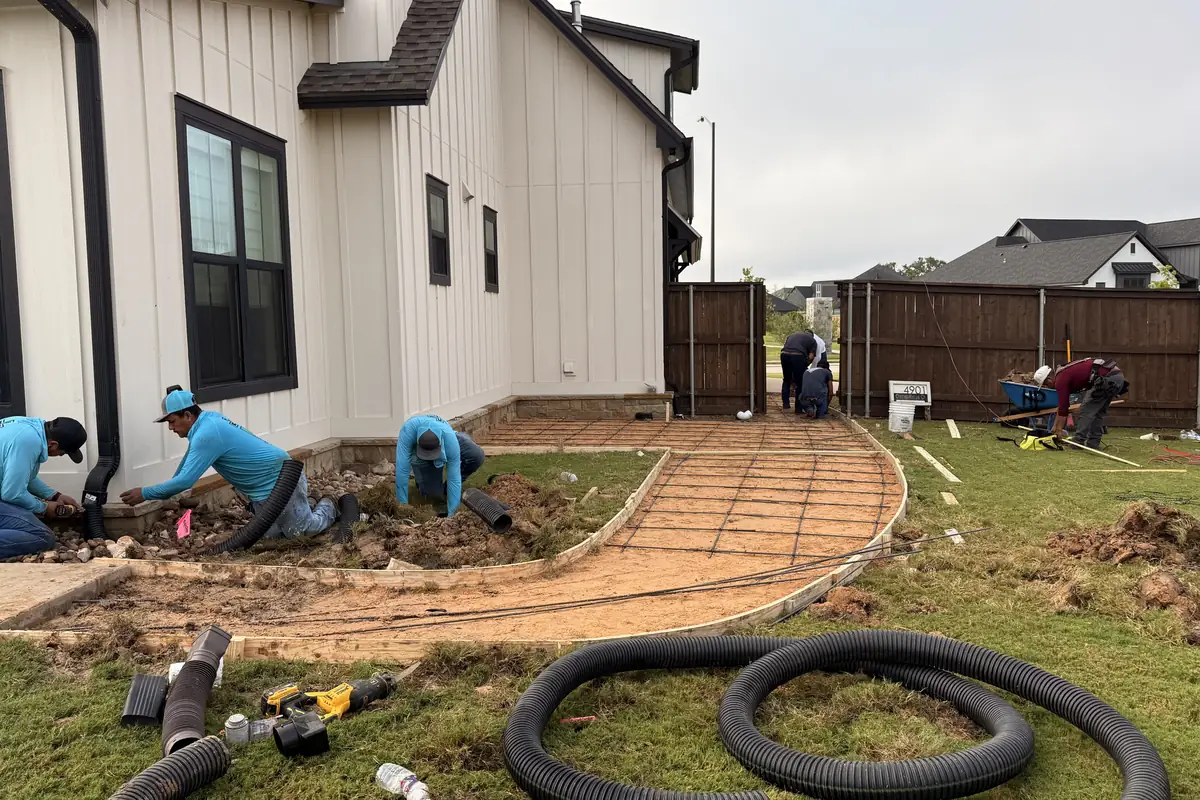
When the lot is flat, or a patio or pool deck interrupts the natural path of water, drains do the work grading cannot. A French drain collects water moving through the soil. Surface and channel drains catch it on hard surfaces. Downspout lines carry roof water past the beds instead of into them. Each is sized and sloped on the plan, then inspected before it is covered. A drain that is hidden should be one that was checked before it disappeared.
Clay, lawns and planting beds
Plants and turf feel drainage problems first. Warm season lawns thin where water stands, and roots in saturated clay struggle for air. Raised beds, amended soil and carefully chosen plants help, but they work best when the underlying grade is right. A thick, even lawn in the Brazos Valley is usually the visible result of unseen work beneath it, and a well drained bed will carry plants through hot summers and the occasional hard freeze with far less trouble. We do not plant in College Station's poor native soil. We bring in our own amended soil, so plants start strong. See soil prep for flower beds and our flower bed installation service.
We don't want your plants to just survive. We want them to thrive.
Retaining walls and changes in level
Where a yard slopes sharply, a retaining wall can create usable level ground, but it also holds back soil and water. A wall needs a proper base, a drainage path behind it and an outlet for the water it collects. Without these, saturated clay pushes against the wall until it leans. We design walls together with the drainage that protects them, so the structure you see is supported by the system you do not. For stone and rock walls, that includes an extensive footer poured under the rock rather than mortar set on bare ground. Patios face the same clay, and the same thinking applies to a patio base that lasts. Read retaining wall footings and drainage, or see our retaining walls service.
Why we draw drainage before the rest
It is far easier to plan for water than to chase it later. A drain line that should run under a future patio needs to be in the ground before the patio is poured. That is why, on every HP project, drainage is the first drawing and not the last. Our CAD plans and 3D renderings show you the finished yard, and the drainage plan beneath it explains why that yard will stay beautiful after the first heavy rain.
Your next step: the project brief
If water is a concern on your property, begin with a project brief. Share the address, a description of what you see after rain, photographs of the affected areas and the outcome you hope for. We review every brief personally, and once we understand the project we reserve your consultation. A city permit or an HOA architectural review may apply to some drainage work, and HP prepares the drawings those reviews ask for.