Where artificial turf excels
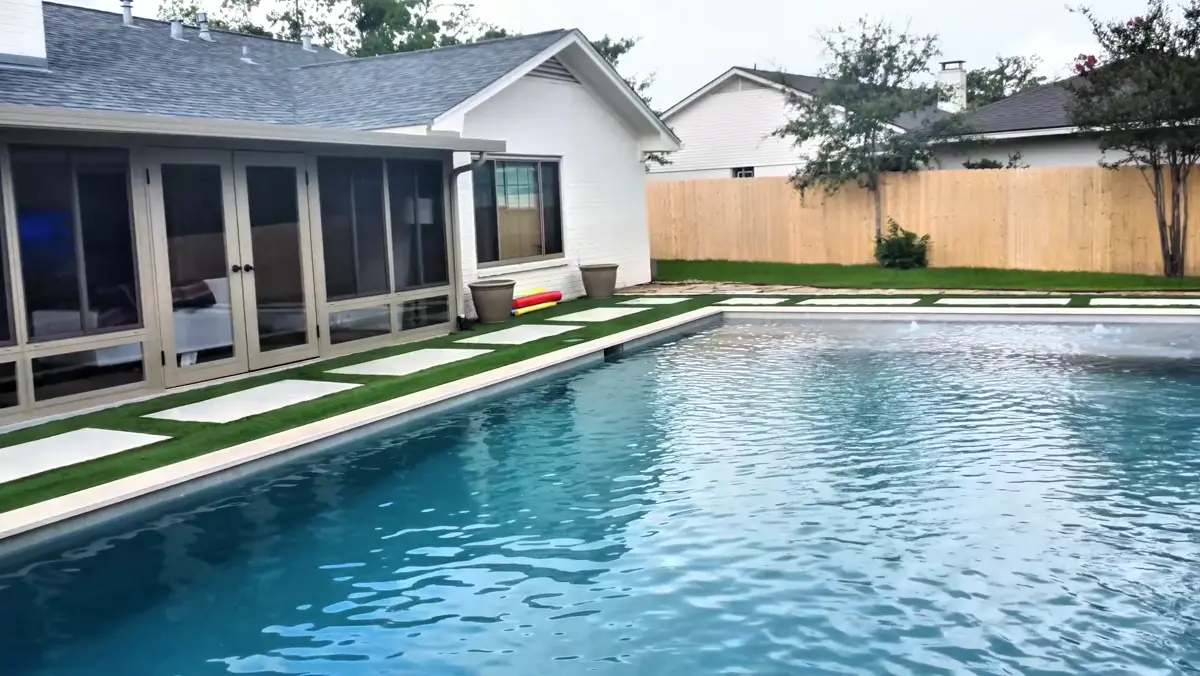
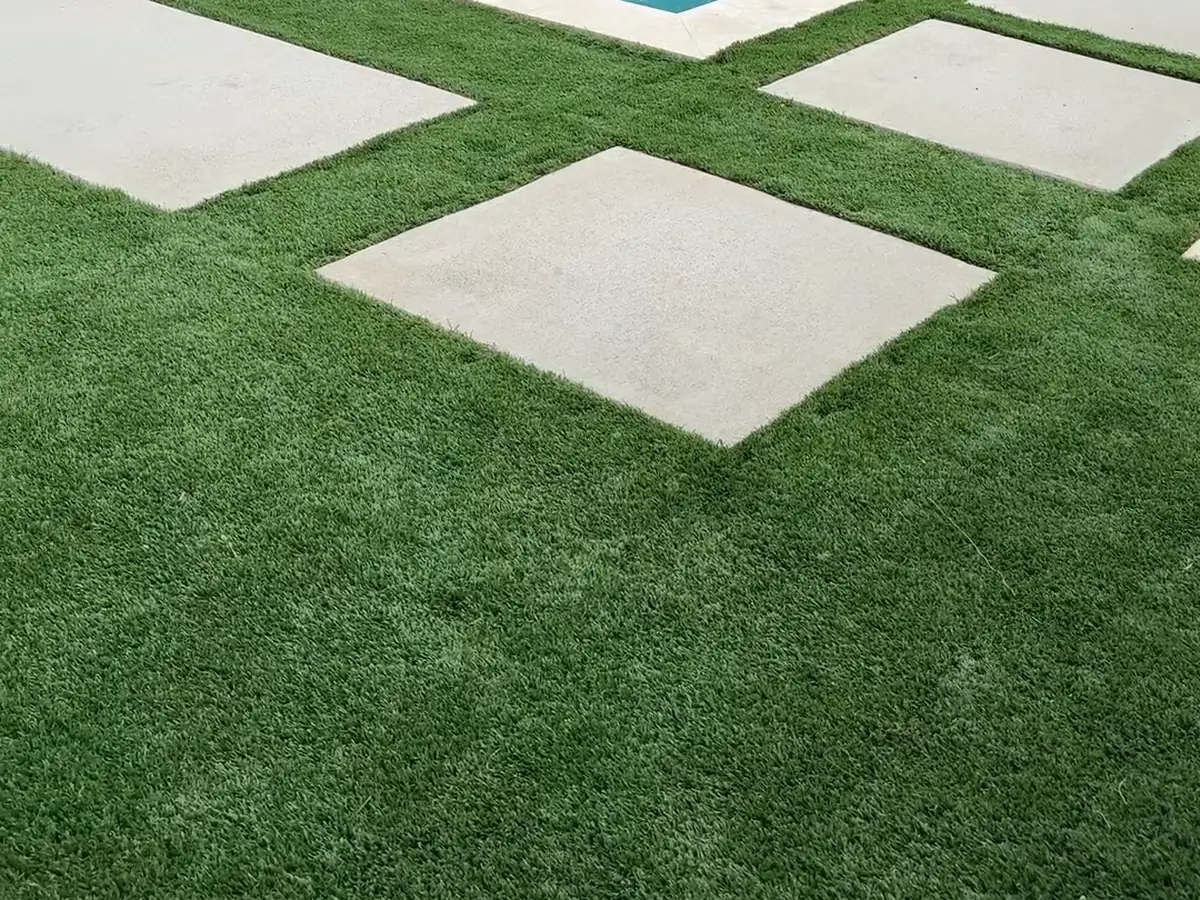
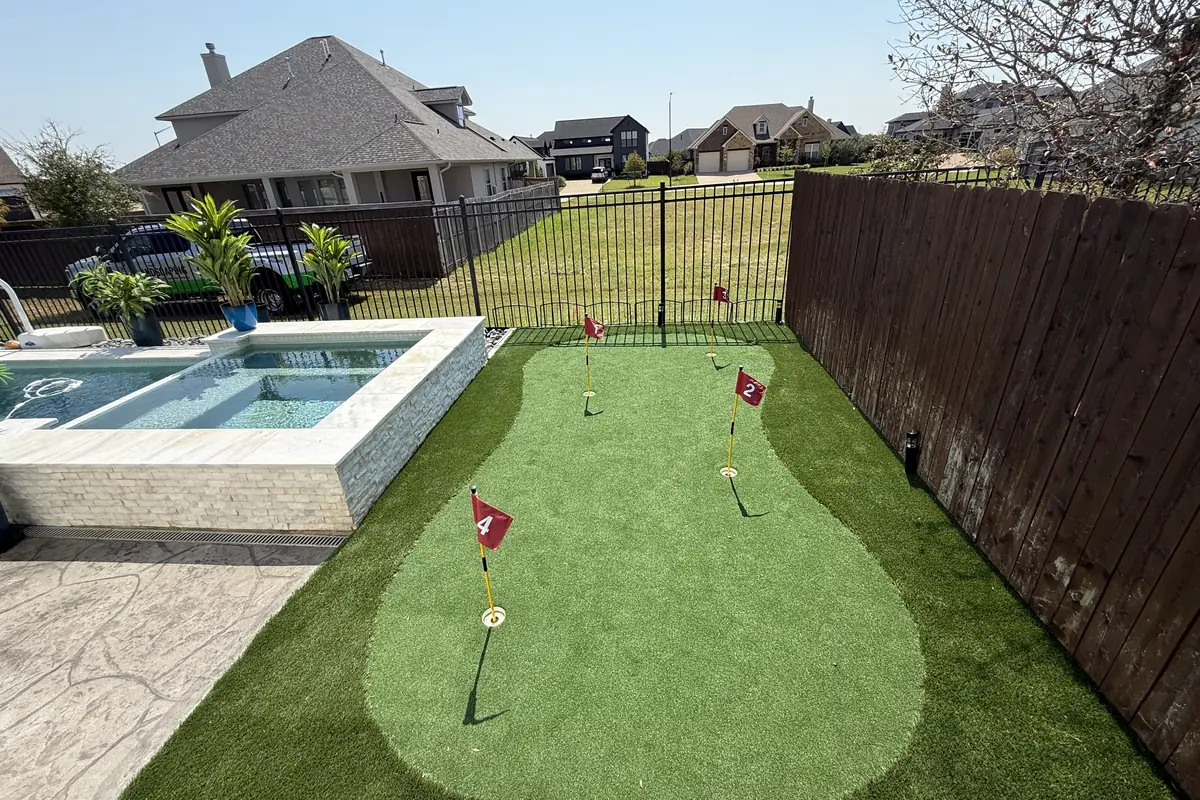
Turf stays green in every season, never needs mowing and uses no irrigation. It shines in places where natural grass struggles: narrow side yards, deep shade, the joints between concrete pads, putting greens and the edges of a pool deck where splashing and foot traffic wear grass thin. In a Brazos Valley backyard these tend to be the corners that never quite look finished, and a well installed turf panel turns them into some of the most polished parts of the property.
The honest drawback: heat
In direct summer sun, artificial turf becomes noticeably hotter than natural grass. In an open, south facing yard in July it can be uncomfortable for bare feet and paws in the afternoon. Shade, lighter infill and a quick rinse all help, and good design places turf where that heat matters least. We would rather tell you this plainly now than have you discover it on a hot afternoon in August, because the right answer depends on where the turf sits and how the space is used.
Where natural sod still wins
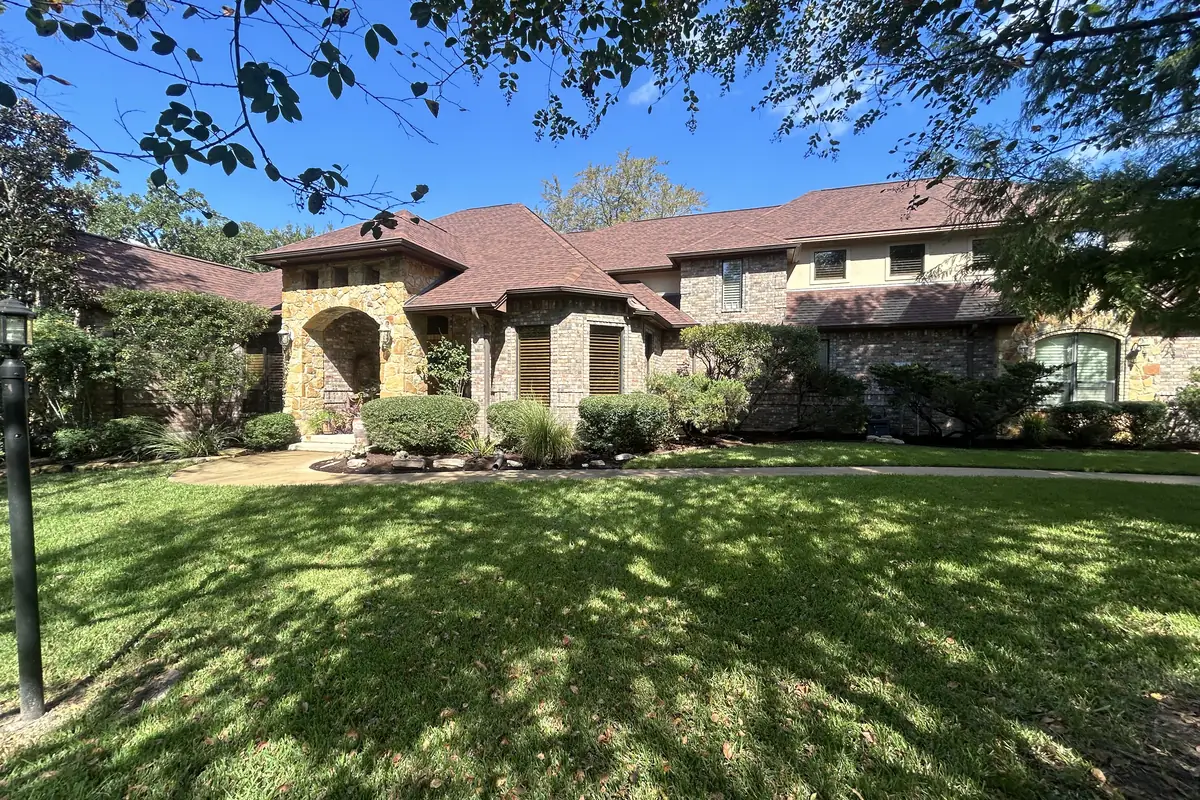
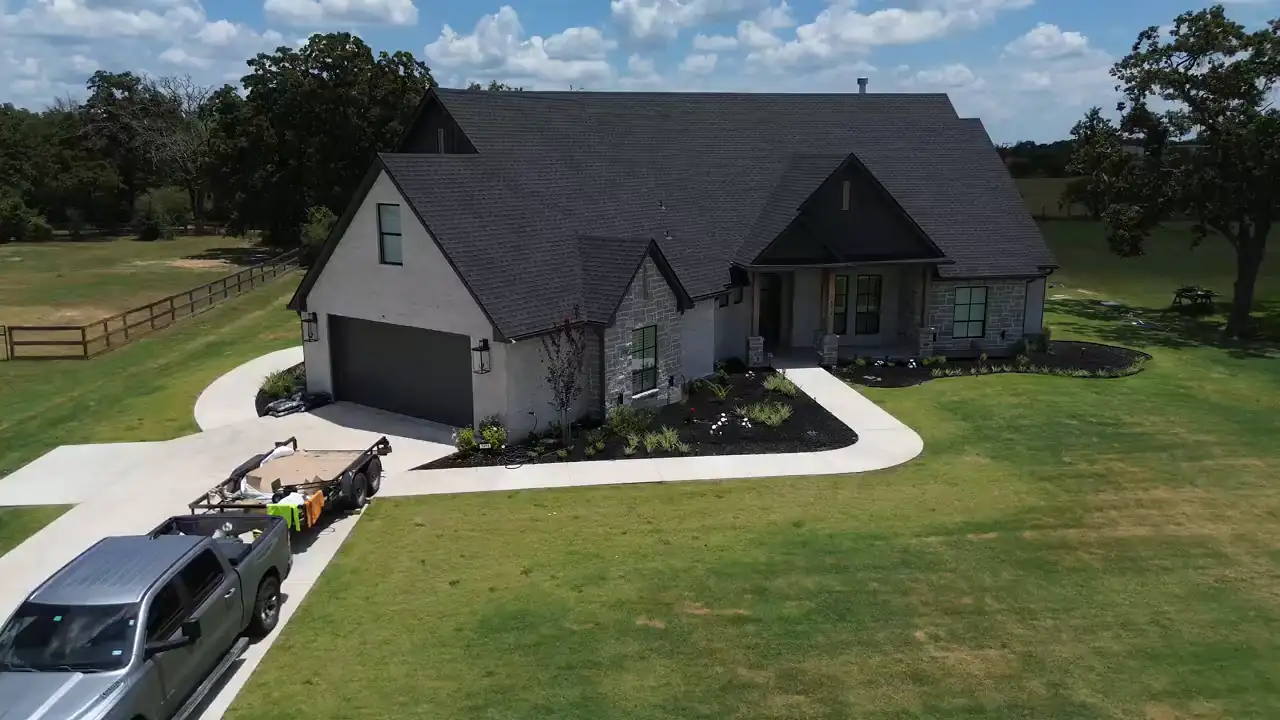
A living lawn cools the air around it, feels soft underfoot at any hour and suits large open areas. It asks for water, mowing and seasonal care in return. For a broad front lawn or a field for children to run on, sod remains the better choice for most families. Warm season grasses such as Bermuda, St. Augustine and Zoysia are well suited to Bryan and College Station, and a healthy lawn gives a home a settled, established look that no manufactured surface fully matches.
Pets, children and daily use
Both surfaces can serve a busy household well. Turf drains quickly, stays clean underfoot after rain and does not turn to mud where dogs run the same path every morning. Sod recovers from play on its own, and a worn patch can be repaired with fresh pieces. The question is less about which is tougher and more about how your family lives outdoors. Tell us about the dogs, the children, the soccer ball and the evening routine, and the design can place each surface where it will be used most gracefully.
What is under the turf matters most
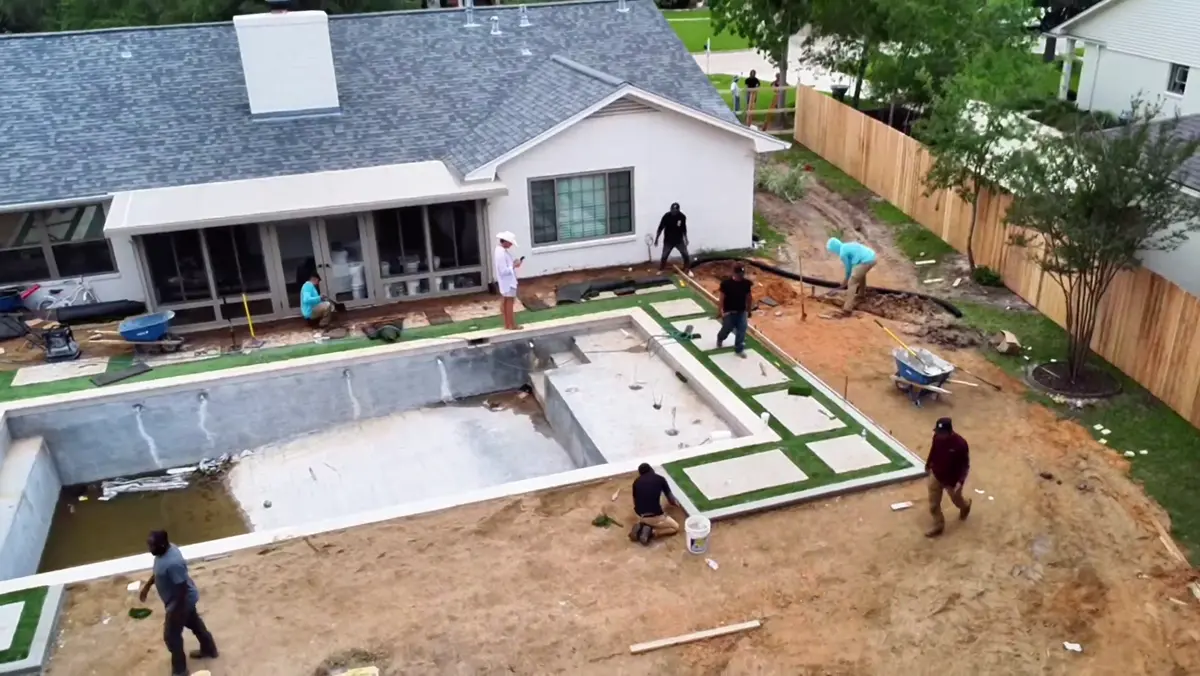
Turf performs only as well as its base. There are two methods, and which one fits depends on what is under the turf today. Over an existing concrete slab, such as a patio, pool deck or pad, the slab is cleaned and checked, and the turf is bonded to it with adhesive made for outdoor turf. Over soil, a proper installation removes the existing soil to depth, builds a compacted, free draining base of decomposed granite and aggregate, and pins and seams the turf so it stays flat and unobtrusive. Read more in glue-down vs granite base turf, or see our artificial turf installation service. On Brazos Valley clay, drainage beneath the base is not optional. Heavy clay swells when wet and shrinks when dry, and a base that holds water will show it in ripples and soft spots. The finished surface is only the last few inches of a carefully built system.
Living with oaks, shade and leaf fall
Many yards in Wellborn, Pebble Creek and older parts of Bryan are shaded by live oaks and post oaks. Deep shade is difficult for most warm season grasses, which is one reason turf is so often chosen beneath mature trees. Leaves and acorns still fall, and turf is easily cleared with a blower or a soft rake. We plan around the root zones of trees you wish to keep, and we will tell you honestly when a tree argues for turf and when it argues for mulch and planting instead.
Care and upkeep, compared
Turf asks for occasional rinsing, a light brushing to keep the fibers upright and prompt attention to anything that spills. It does not ask for mowing, fertilizer or an irrigation schedule. Sod asks for all of these, and rewards that attention with a living surface that changes with the seasons and turns tan when it goes dormant in winter. Neither is better in the abstract. The better choice is the one whose rhythm suits the way you want to spend your weekends.
The best yards use both
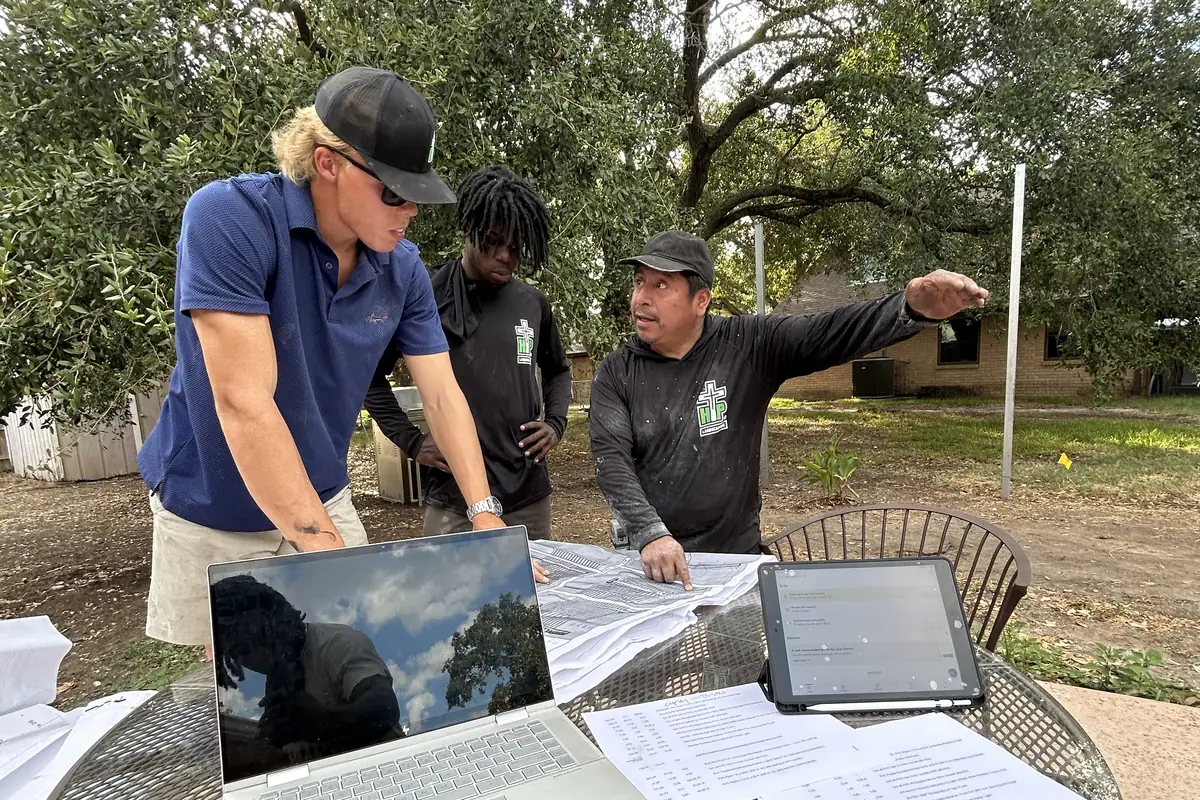
Many of our projects combine the two: natural sod where the family plays, artificial turf between stepping pads, around the pool and on the putting green. Each material is used where it performs best, and the design ties them together with clean edges, consistent lines and a considered transition where one meets the other. We draw the plan in CAD and prepare 3D renderings, so you can see both surfaces in place before ground is broken.
Your next step: the project brief
If you are weighing turf against sod, the clearest way to begin is a project brief. Tell us the service you are considering, the address, the scope, a few photographs of the yard and any inspiration you have saved. We review every brief personally, and once we understand the project we reserve your consultation. Your written proposal will then set out the materials, the plan and the schedule for your yard.